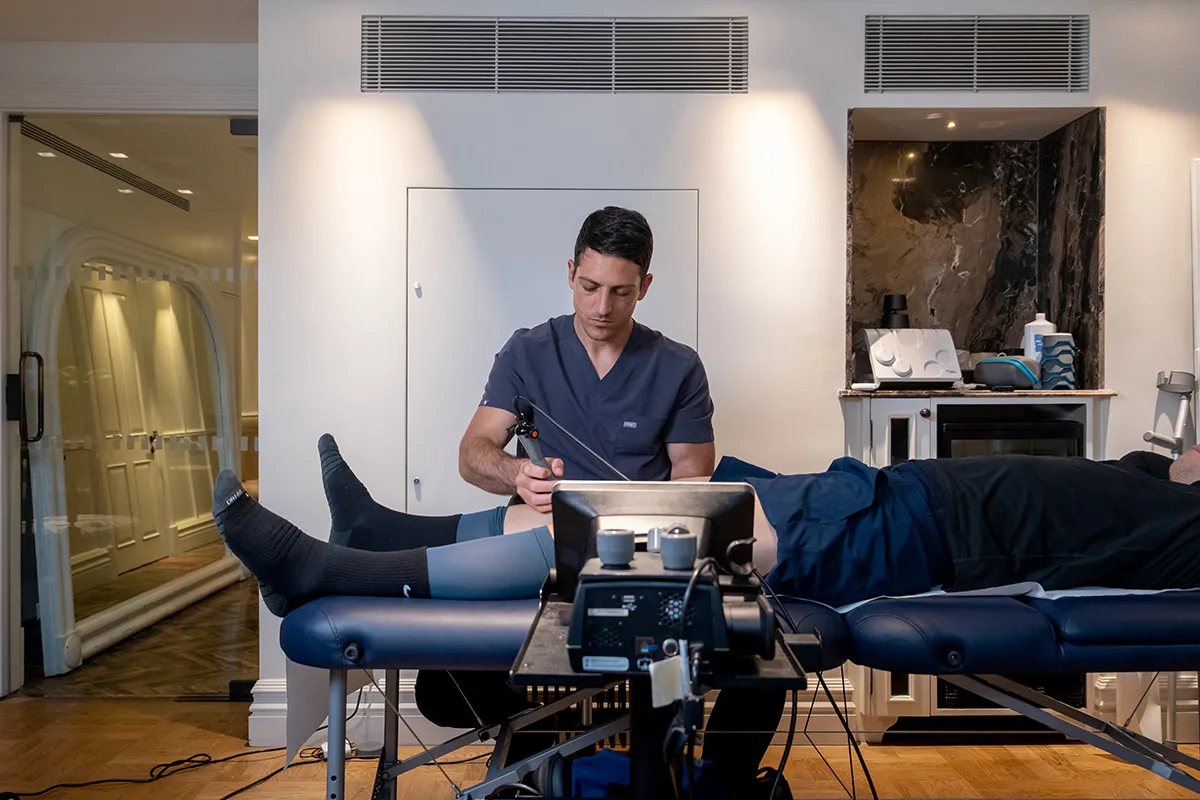
Knee Pain Treatment in Kensington
Expert physiotherapy for knee pain – Focusing on the Root Cause, Not Just the Symptoms.
Knee Pain Treatment at The Physio Box
Latest Reviews
See What Our Customers Have To Say!
Why Knee Pain Isn’t Always What (or Where) You Think It Is
The knee is one of the most hardworking joints in the human body, acting as the primary hinge between your hip and foot. Because it absorbs immense load during walking, running, and navigating Kensington’s stairs, it is often where mechanical issues in the body show up first. Too often, knee pain is treated as a simple localised issue – prescribing rest, ice, or generic quad exercises. However, a scan showing “wear and tear” or minor structural changes doesn’t always tell the whole story. At The Physio Box, we routinely see patients who have been living with persistent knee pain for months or years simply because the underlying driver – such as poor hip control, ankle stiffness, or altered gait mechanics – was never addressed. We don’t just treat the joint where it hurts; we re-engineer how your entire lower limb absorbs and distributes weight so you can move with confidence again.When Should You See a Physiotherapist for Knee Pain?
You don’t need to wait until you are struggling to walk to seek professional care. Early, targeted intervention prevents compensatory habits that lead to long-term joint wear. It is time to get your knee thoroughly assessed if:- Your knee feels unstable, gives way, or catches/locks during daily movements or sports.
- Pain persists after running, walking, or prolonged sitting (e.g., at a desk or after movie/theatre visits).
- You experience swelling, warmth, or stiffness, particularly when getting out of bed in the morning.
- Going up or down stairs causes a sharp, burning, or aching pain around or behind your kneecap.
- Rest hasn’t worked – the moment you return to exercise, the ache or stiffness returns.
Common Causes of Knee Pain We Treat (Including Commonly Missed Issues)
Knee pain manifests in many ways depending on which tissue is overloaded. We perform in-depth physical assessments to pinpoint the exact driver of your discomfort:
1. Patellofemoral Pain Syndrome (Runner’s Knee) — Often Mismanaged
Pain around or behind the kneecap, typically aggravated by stairs, squatting, or running. It is rarely a knee problem alone; it is usually driven by patellar tracking issues caused by hip weakness or foot pronation.
2. Meniscal Tears & Cartilage Irritations
Damage or wear to the shock-absorbing cartilage rings in the knee joint. Causes sharp pain, clicking, catching, or localised swelling along the joint line. Many meniscus issues can heal or be managed successfully without surgery.3. Knee Osteoarthritis (Wear & Tear)
Degeneration of joint cartilage leading to morning stiffness, deep joint aching, and reduced flexibility. Through targeted loading and strength work, we help restore mobility and decrease pain without relying solely on injections.
4. Patellar & Quadriceps Tendinopathy
Overload of the tendon connecting the kneecap to the shinbone (common in runners, jumping sports, or sudden increases in activity). Key concept: Tendons require controlled, specific loading – not total rest – to heal.
5. Ligament Sprains & Tears (ACL, MCL, LCL, PCL)
Stretching or tearing of key stabilising ligaments, often from sports, twisting injuries, or trauma. We provide non-surgical rehabilitation as well as structured pre- and post-operative rehab.
6. Iliotibial Band (ITB) Friction Syndrome
Pain on the outer side of the knee caused by excessive friction and tension along the IT band, frequently seen in distance runners and cyclists.
7. Referred Pain from the Lumbar Spine or Hip
Sometimes the knee joint itself is completely healthy, but pain is being referred down from nerve irritation in the lower back or dysfunction in the hip joint.
Book Your Consultation
Knee pain shouldn’t limit your life. At The Physio Box in Kensington, we provide expert physiotherapy to help you move freely, feel better, and prevent future discomfort. Our personalised treatment plans are designed to relieve pain, restore mobility, and improve your overall well-being.
How We Get You Back to Moving Pain-Free
At The Physio Box, we combine precise diagnostic protocols, hands-on treatment, and progressive exercise science to deliver lasting results.
Biomechanical & Movement Assessment: We look at your knee static alignment, dynamic tracking, hip stability, ankle mobility, and gait/running mechanics.
Targeted Hands-On Therapy: Utilising manual therapy, joint mobilisations, soft tissue release, dry needling, or shockwave therapy to reduce acute pain and restore immediate movement range.
Structured Load Rehabilitation: Progressing your knee through controlled, measurable loading to build resilience in the cartilage, tendons, and supporting muscles.
Gait & Movement Correcting movement patterns so that every step you take in daily life distributes weight evenly across the joint.
Advanced Technology & Modalities for Precision Knee Care
We don’t rely on guesswork or generic exercise sheets. For both soft-tissue conditions and post-operative rehabilitation, we combine advanced technology with objective performance data.
VALD ForceDecks & HumanTrak Movement Analysis: Objective testing is essential for determining true readiness to progress. Using VALD ForceDecks, we analyse squatting, jumping, and landing strategies to measure force production and asymmetries between your injured and non-injured legs. Combined with HumanTrak movement analysis, this data guides return-to-running, training, or sport—basing decisions on exact data rather than timeframes or “how it feels.”
Diagnostic Ultrasound Imaging: Integrated into our assessments where appropriate, high-definition ultrasound allows us to evaluate soft-tissue structures, tendons, and fluid around the knee in real-time, providing an objective baseline to track your progress.
Targeted Modalities (Shockwave & Laser Therapy): For conditions like Patellar or Quadriceps Tendinopathy and ITB friction, we utilise Shockwave Therapy and Laser Therapy alongside progressive load management to accelerate healing and calm persistent joint inflammation.
Meet Your Knee Specialists
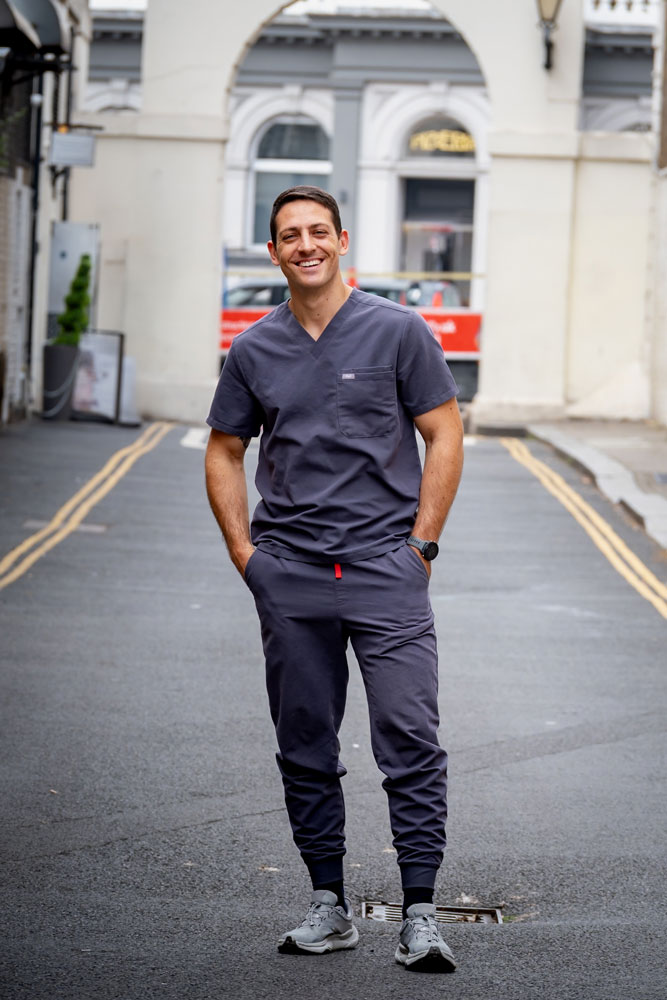
Giuseppe Salustri
Clinical Director – Founder & Senior Consultant Physiotherapist
Giuseppe has extensive experience in assessing and managing complex knee injuries, developed through years of treating professional rugby players and elite athletes. From acute ligament tears and cartilage damage to persistent, long-standing knee pain, Giuseppe specialises in non-surgical recovery, diagnostic ultrasound assessment, and guiding patients safely back to top performance.
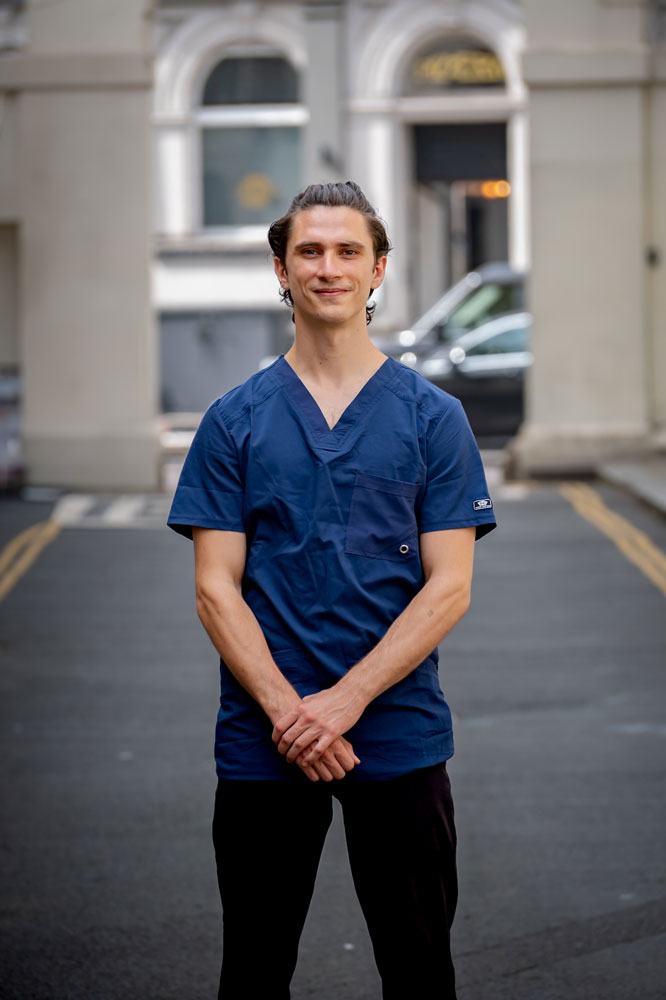
Enrico Garfield
Senior Consultant Physiotherapist
Enrico brings exceptional hands-on manual therapy skills to knee rehabilitation. He combines targeted joint mobilisations and soft-tissue release with progressive exercise therapy – focusing on restoring fluid knee movement, calming down acute joint flares, and rebuilding strong, confident movement patterns.

Joan Del Arco
Senior Consultant Physiotherapist
Joan specialises in sports rehabilitation for active individuals and athletes dealing with knee pain and tracking issues. Her approach merges progressive functional strength training with advanced hands-on techniques – like deep dry needling and joint mobilisations – tailored specifically to the physical demands of your sport or active lifestyle.
Case Study: Helping a 70-Year-Old Runner Avoid Surgery & Return to Daily Life
The Challenge: A female patient in her 70s came to The Physio Box with severe, sharp pain on the inside of her knee following a sudden increase in running activity. Walking stairs, bending, and routine daily tasks were severely impacted, and her sleep was disturbed. Previous X-rays were inconclusive, previous physio elsewhere had yielded little improvement, and an orthopedic surgeon had discussed arthroscopic surgery.
Our Assessment: We conducted a detailed clinical evaluation supported by Diagnostic Ultrasound Imaging. The ultrasound revealed significant joint swelling and fluid accumulation at the front and back of the joint that standard X-rays had missed, alongside degenerative joint changes.
Phase 1 (Pain & Swelling Relief)
We used Laser Therapy, ice/compression, and Neuromuscular Electrical Stimulation (NMES) to calm the joint down and restore muscle activation without pain.
Phase 2 (Targeted Rebuilding)
Rather than just focusing on the knee, we progressively built strength across her entire lower limb and hips, retraining how her body absorbed forces during daily movement.
The Outcome: The patient achieved remarkable improvements in pain, mobility, and confidence, fully restoring her functional capacity and successfully managing her knee conservatively without needing surgery.
A Rehabilitation Programme Built Around You
Every knee injury is different. A runner with patellofemoral pain has very different demands from someone recovering from an ACL reconstruction or an individual managing knee osteoarthritis.
Our rehabilitation programmes are therefore designed around the individual patient, their injury and the activities they want to return to.
By combining clinical assessment, diagnostic imaging where appropriate, progressive strength training and objective movement and performance testing, we can identify deficits, track improvements and continually adapt rehabilitation as the patient progresses.
The goal is to help patients not only recover from their knee injury, but regain the strength, confidence and physical capacity required for everyday life, running and sport.
Frequently Asked Questions About Knee Pain
Q: Do I need an MRI or X-ray before starting physiotherapy?
A: In most cases, no. Our detailed physical examinations are usually sufficient to identify the structural issue or movement dysfunction. If we suspect a severe structural tear requiring imaging, we can refer you directly for a private scan.
Q: Should I rest completely if my knee hurts?
A: Complete rest is rarely the best solution. It causes the surrounding supporting muscles (like the quadriceps and glutes) to weaken, making the joint more vulnerable when you resume activity. Controlled, non-painful movement is usually the fastest route to recovery.
Q: Can physiotherapy help me avoid knee surgery?
A: Yes. Clinical evidence consistently shows that structured physiotherapy is often as effective as surgery for many conditions—including degenerative meniscus tears, runner’s knee, and early-to-moderate osteoarthritis.
Take Control of Your Knee Health Today
Don’t let knee pain restrict your movement, work, or athletic goals. Book an expert assessment at our South Kensington clinic and receive a clear, personalised roadmap to full recovery.
Get In Touch
Book Now
Leave Your Message